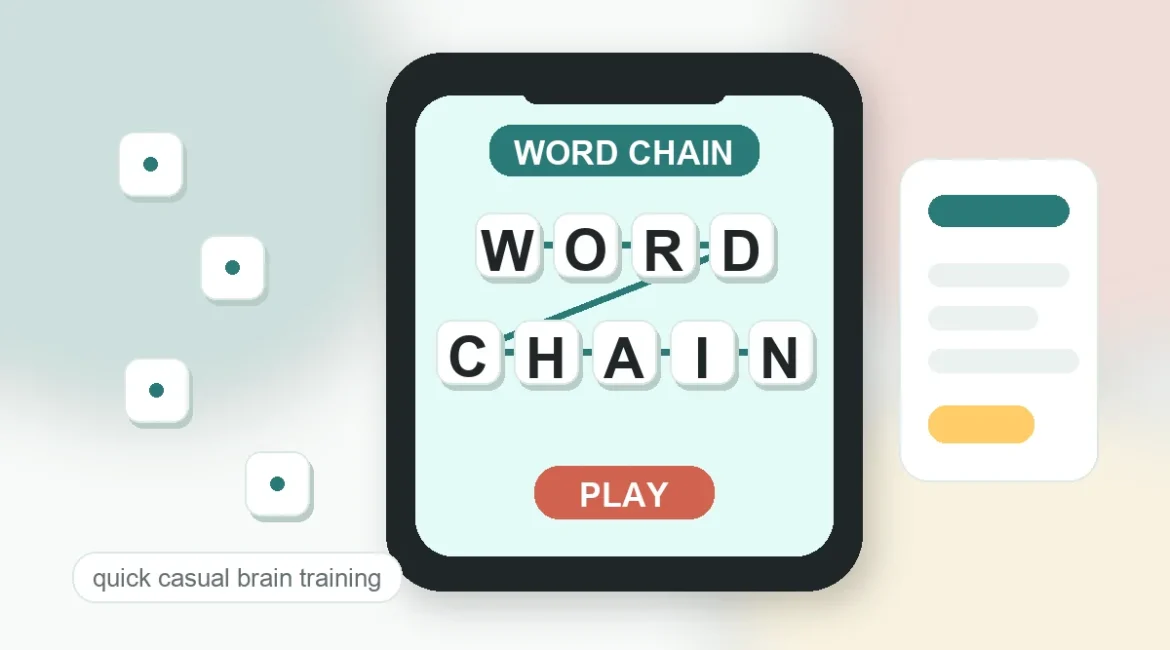
What is a word chain game and why it fits casual play
A word chain game asks players to build a sequence of words where each new word connects to the previous one by a letter, syllable, or meaning. Rules are flexible—common variants require that each word starts with the last letter of the previous word, or that words share a root or category. Because rounds are short and rules are simple, word chain games are a natural fit for casual players who want meaningful mental activity without long commitments.
Benefits for quick brain training
Short play sessions can still deliver concrete cognitive perks. In particular, word chain games offer:
- Vocabulary practice: Recalling or discovering words strengthens word retrieval and exposes you to new terms in a low-pressure context.
- Working memory refresh: Keeping the chain’s rules and the last word in mind trains short-term memory and sequencing.
- Processing speed: Fast rounds encourage quicker word-finding and decision-making, improving mental agility over time.
- Focused attention: The need to follow the chain and avoid repeats trains sustained but gentle concentration—ideal for short breaks.
- Stress-friendly pacing: You control the tempo: play relaxed rounds for a calming effect or time-limited rounds for an energizing boost.
Why word chain games suit short, casual sessions
Here are a few reasons these games align with the casual gaming experience:
- Quick setup — no long tutorials, equipment, or complicated menus.
- Flexible length — a round can be one minute or ten; you decide the depth.
- Accessible mechanics — players of all ages and skill levels can join immediately.
- Low emotional stakes — casual players can experiment and learn without competitive pressure.
- Solo or social — play alone for a peaceful brain break or with friends for light conversation and laughter.
Quick how-to: two beginner-friendly variants
Here are simple variants you can try anywhere—no special app required.
- Last-letter chain: Start with any word. The next player names a word that begins with the last letter of the previous word (cat → tree → eagle). Set a time limit per turn for a faster workout.
- Category chain: Choose a category (fruits, cities, animals). Each word must belong to the category and start with the last letter of the previous entry (apple → elderberry → yam). This combines vocabulary with category recall.
Ten-minute routines for casual players
Make word chain practice a tiny daily habit. Here are three routines you can complete in under ten minutes:
- Morning warm-up (5 minutes): Play a rapid one-player last-letter chain to wake up your word-finding pathways. Aim for 10 to 15 connected words.
- Commute focus (8 minutes): Choose a silent category chain while traveling. Try to reach a chain of 20 without repeating words—this keeps your mind engaged without requiring visuals.
- Evening cooldown (7 minutes): Play a relaxed two-player game with a partner or housemate at a slow pace to enjoy conversation and gentle cognitive challenge.
How to make sessions more effective (without making them stressful)
- Set tiny goals: Aim for a specific number of words or a time limit rather than perfection. Tiny, achievable goals increase consistency.
- Mix variants: Switch between last-letter, category, or theme-based chains to exercise different parts of language ability.
- Use friendly constraints: Limit words to common vocabulary on some days and challenge yourself with rarer words occasionally.
- Track casually: Keep a simple streak calendar if you like gamified motivation—don’t overdo it.
Where to play: offline and online options
Word chains are perfectly playable without any device—use them as conversation games or mental warm-ups. If you want a digital version for short sessions, there are lightweight web and mobile versions that preserve the quick-play feel. One easy example to explore is the word chain game, which provides a familiar, browser-friendly format for casual rounds.
Safety and accessibility for casual players
Word chain games are inclusive: you can adapt difficulty for children, language learners, or anyone looking for a gentle cognitive challenge. To keep it accessible:
- Lower the vocabulary bar for mixed-age groups.
- Allow hint cards or a dictionary for learning-focused sessions.
- Use audio-only rules for players who prefer not to look at a screen.
Final tips: keep it fun and flexible
The best brain-training habits are ones that feel enjoyable and easy to maintain. Word chain games hit that sweet spot: short, flexible, and social if you like company. They help sharpen vocabulary and attention without turning your break into a chore. Try adding a two- to ten-minute chain to your day for a steady, low-friction mental boost.
Ready to try?
Start with one short round today—no special app required—and see how a tiny word ritual can refresh your focus and bring a bit of cozy challenge to your casual gaming routine.